I Complained to a Cursor Engineer at a Meetup
The Cursor Hong Kong meetup — Background Agents, vibe coding demos, and what happens when you're probably the youngest person in the room
Last night I was at the Cursor Hong Kong meetup. The venue was small, the audio could have been better, and I was almost certainly the youngest person there by several years. I also got to go on stage first and demo to a room full of engineers.
Worth it.
The Cursor team dialled in
The headline guest was Jason Ginsberg — Head of Engineering for Product at Cursor, and the person who built Background Agents for web and mobile. He joined remotely to walk through how Background Agents actually work under the hood, what architectural decisions were made, and where the team is headed next.
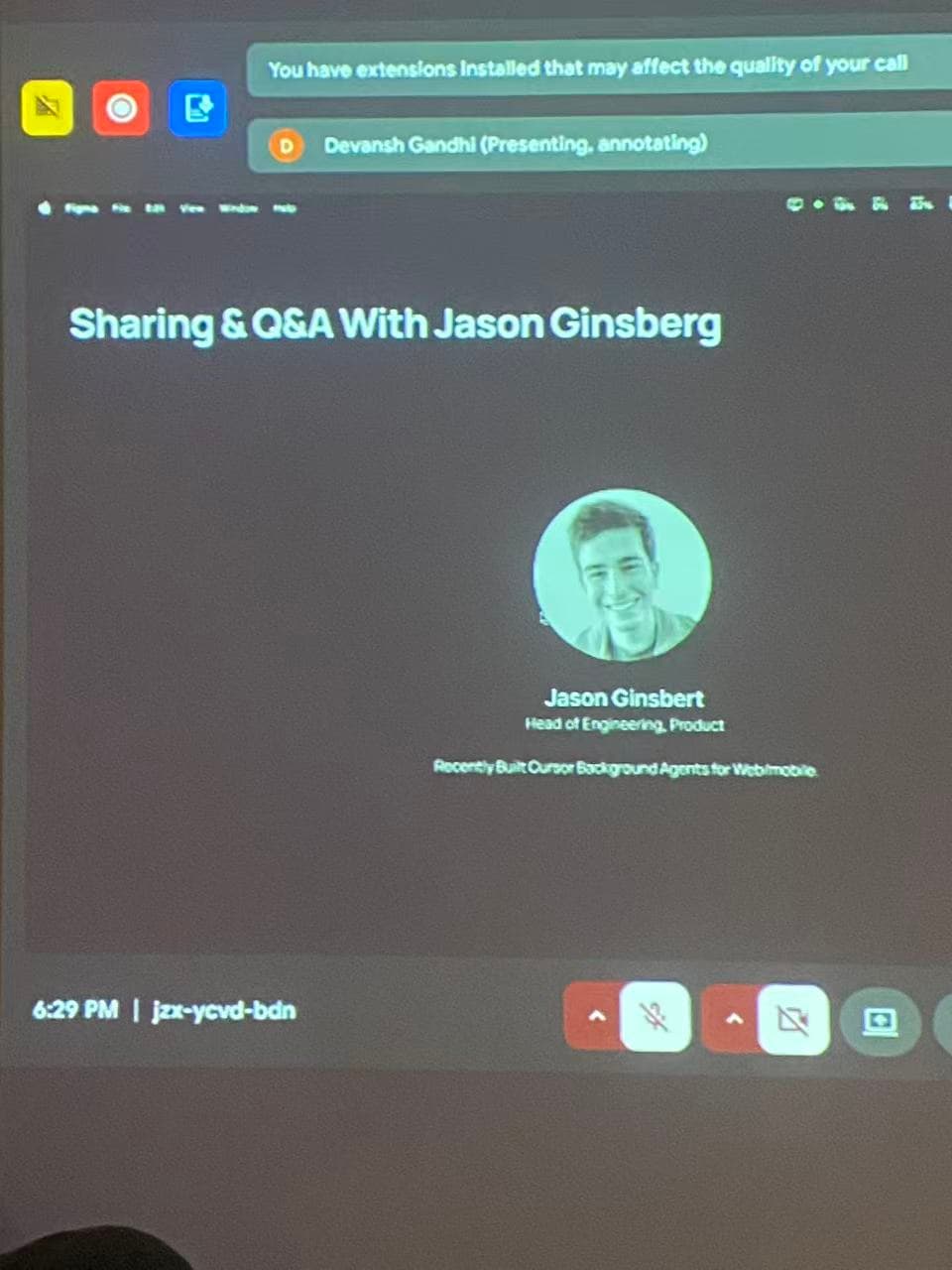
A few things from his talk that stuck:
- —Background Agents are designed to run tasks asynchronously — you set it going, do something else, come back to results. The architecture is built around that async mental model, not around a chat loop.
- —Coming improvements: better Tab completion, and a much larger codebase indexing capacity. The codebase context problem is something they're actively investing in.
- —One audience member asked the obvious question: how does Cursor as an IDE compare to Gemini CLI and Claude Code as command-line tools? Jason's take was essentially that they occupy different positions — CLI tools are powerful for specific workflows, but the IDE-integrated model is where most developers actually spend their time.
I went first
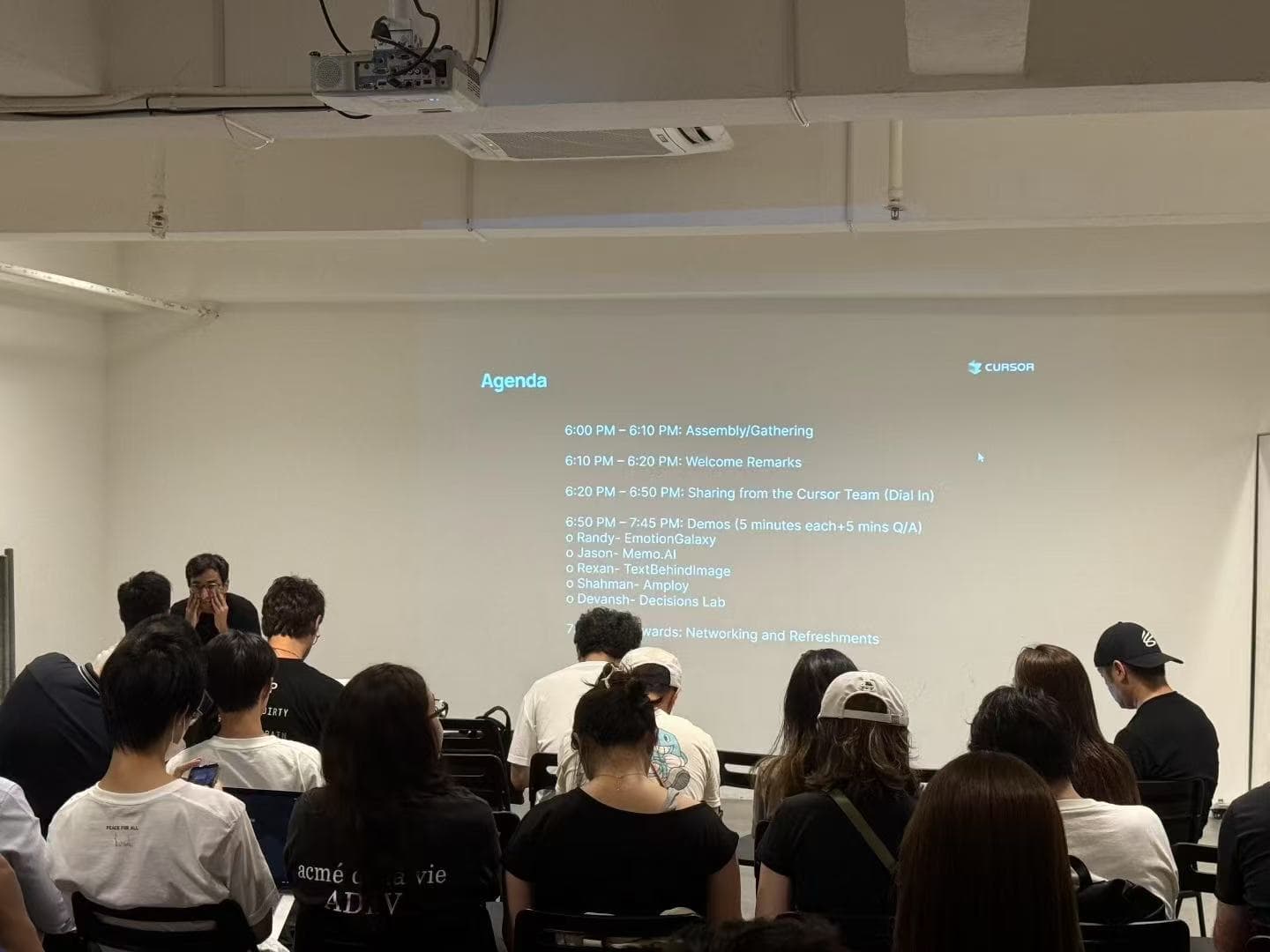
The demo lineup was Randy (EmotionGalaxy), Jason (Memo.AI), Rexan (TextBehindImage), Shahman (Amploy), Devansh (Decisions Lab). Five minutes each plus Q&A.
I went first. I presented EmotionGalaxy — the app I built for the Apple Swift Student Challenge, which is also how I ended up at WWDC. The demo covered the app itself and, more practically, how I combine Xcode and Cursor in the same workflow: what lives in Xcode, what goes to Cursor, where the handoff happens.
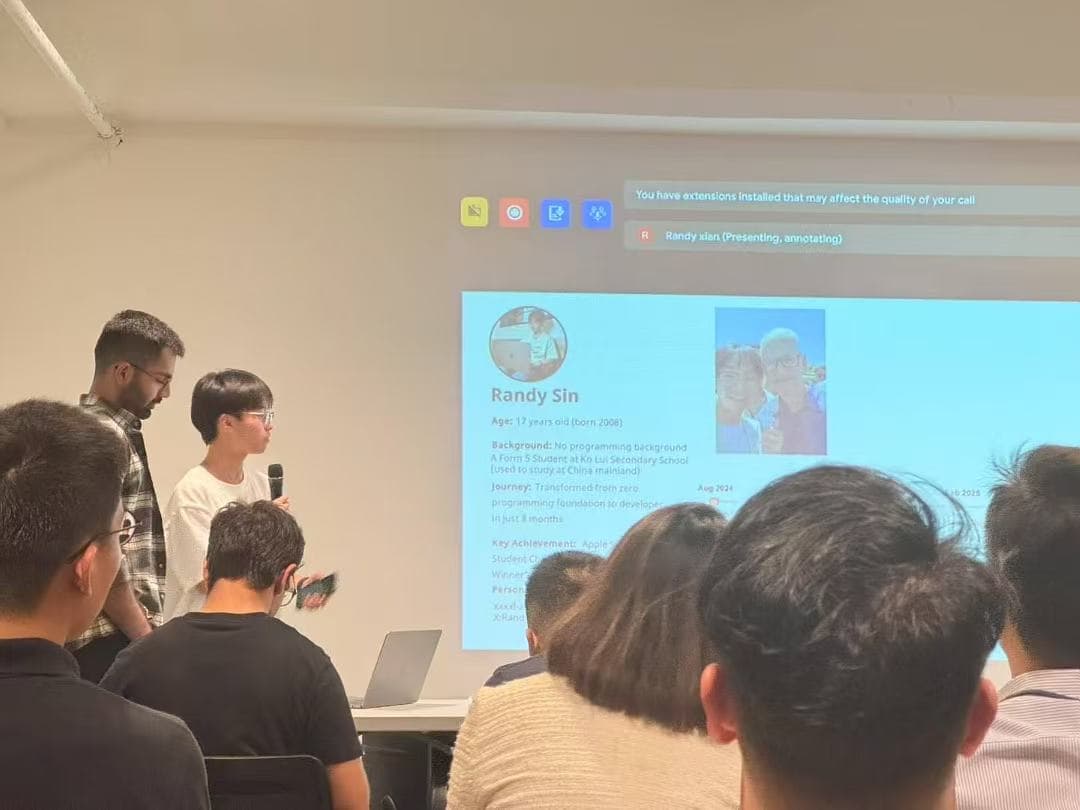
English-language presentation in front of a room of engineers who are all older and more experienced than you is a specific kind of pressure. I got through it. The questions after were good — people were genuinely curious about the Xcode + Cursor setup, which isn't something most web-focused developers think about.
The other demos
A few things from the other presenters that I'm still thinking about:
There was an HKU medical student who built a health-related tool with Cursor. I hadn't expected the cross-disciplinary angle — someone using vibe coding not to build a startup but to solve a problem in their own field. That use case feels underexplored.
Rexan presented TextBehindImage and mentioned something I recognised immediately: waking up to see your product hit tens of thousands of views and downloads, then spending the afternoon fixing bugs. That exact experience — sudden traction, sudden pressure — is one of the more disorienting things about building in public. Turns out he's already been accepted to a US university and is on gap year. Building things while everyone else is preparing applications.
The complaining part
After the talks, at the after party, I ended up talking to some of the Cursor team directly. I told them what I actually think: the Xcode integration still has friction, context management across long sessions degrades in ways that are hard to recover from, and there are specific Swift-related behaviours that feel undertrained compared to the TypeScript/Python experience.
They listened. They asked follow-up questions. Whether any of it goes anywhere, I have no idea. But there's something genuinely useful about having access to the people building the tools you use every day — not to get special treatment, just to give honest feedback to someone who can actually do something with it.
The Hong Kong tech scene is smaller than it should be. Nights like this help.